
$0.59
national tariff per kWh after the Dec 2025 cut — was up to $1.00
$0.20
what Berbera pays today, after new solar capacity
60–80
MW installed in the entire country — a rounding error of demand
5.5–6.0
kWh/m²/day of solar irradiation — world-class sun
7–9
m/s coastal wind speeds — commercially strong
Sources listed at the bottom of this page.
Diesel Prices, Desert Sun
The gap between what Somalilanders pay and what their sky delivers is the whole investment case.
The grid today
- Fragmented, diesel-fired private producers — no national grid
- Among the highest electricity prices on Earth for decades
- 60–80 MW of capacity for a nation of 5.7 million
- Fuel imported by sea and trucked inland, at full price volatility
The resource overhead
- Solar irradiation of 5.5–6.0 kWh/m² per day, almost year-round
- Coastal and escarpment winds averaging 7–9 m/s
- Flat, cheap, sun-drenched land beside port logistics
- A government that just proved it will act on prices
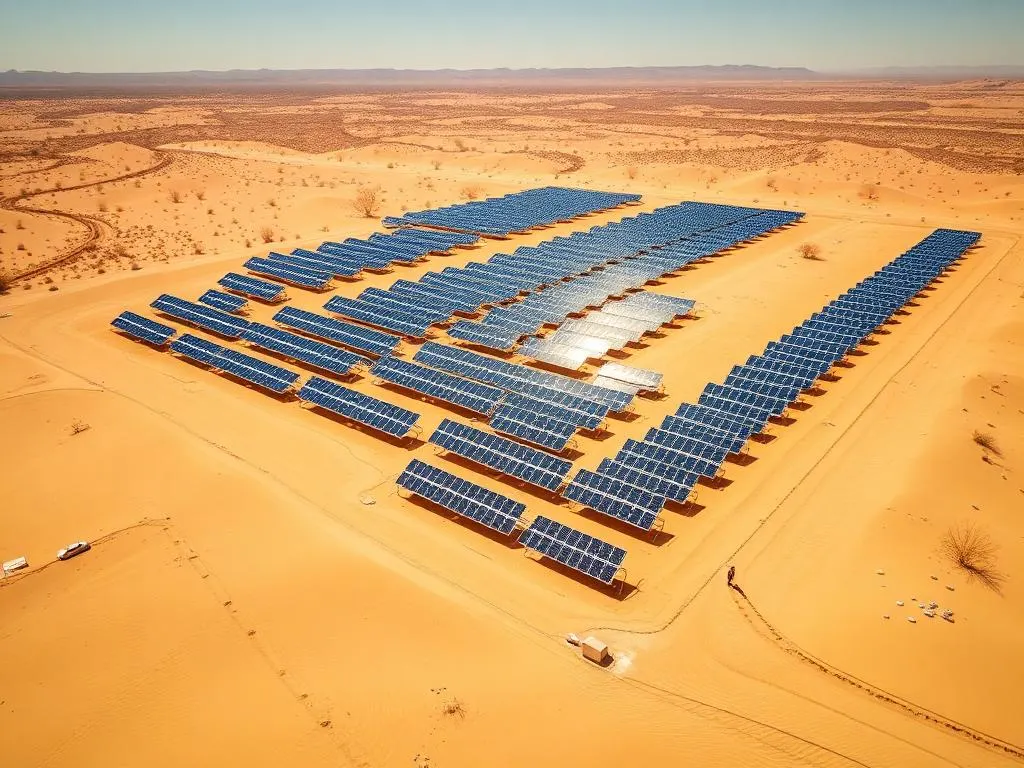
Berbera Already Shows the Way
A World Bank-backed $20M project is building 12 MW of solar with a 36 MWh battery and new transmission lines in Berbera — and a UAE-backed $24M solar project broke ground in 2026 on top of it.
The result came fast: Berbera's tariff fell to $0.20 per kWh — roughly a third of what the rest of the country pays. Every other city in Somaliland is now a queue of customers waiting for the same equation.
Four Ways In
Each one displaces expensive diesel with cheap sun and wind — engineering Israel has exported to over 100 countries.
Utility-scale solar with storage
Every project that displaces $0.59/kWh diesel power with ~$0.20/kWh solar is a cost-cutting machine with instant demand. Berbera — already down to $0.20 — sets the template; Hargeisa, Burao, and the corridor towns are the follow-on markets.
Solar-hybrid conversion of the diesel IPPs
The sector is a patchwork of private producers running diesel generators — natural joint-venture partners for solar-plus-battery retrofits that cut their fuel bill and their tariffs at once.
Coastal wind development
Average wind speeds of 7–9 m/s along the coast and escarpments are commercially strong by any standard. Berbera pairs the resource with the port logistics needed to bring turbines in.
Commercial & industrial captive power
Factories, hotels, cold-chain facilities, and the quarantine yards of the livestock trade all pay the same steep tariffs — rooftop and captive solar is the fastest sale in the market.
Government-to-government track: on 17 June 2026, Somaliland and Israel's Energy Ministry agreed to cooperate on water and energy — making this one of the first sectors with a signed bilateral framework behind it.
Sources for figures on this page
- Unlocking Somaliland's energy potential — Ministry of Energy and Minerals
- Powering the future: can sun and wind deliver? — Somaliland Standard
- Somaliland slashes electricity prices to $0.59/kWh — Saxafi Media
- Berbera electricity cut to $0.20/kWh — Somaliland Standard
- Berbera 12 MW solar + 36 MWh storage — World Bank Somali Electricity Sector Recovery Project
- UAE-backed $24M Berbera solar project — Energy News Africa
- Somaliland's battle to break the energy cartels — Saxafi Media
- Solar energy in Somalia: current state and prospects — Energy Strategy Reviews
- Water & energy cooperation agreement — The Jerusalem Post